


Most businesses know community involvement creates business value. Few realize how much of that value they're failing to capture.
Supporting local nonprofits, sponsoring youth sports, funding scholarships, partnering with civic organizations, or encouraging employees to volunteer all contribute to stronger relationships and greater trust within a community. Customers notice which businesses consistently show up. Employees are proud to work for organizations that invest locally. Community leaders remember who supports important causes. These efforts strengthen goodwill in ways that traditional advertising often cannot.
Yet an important question rarely enters the conversation.
If community involvement creates so much value, why do so few businesses continue benefiting from those investments years after they have been made?
The answer is not that community involvement fails to work. The answer is that businesses have become remarkably good at creating community value while remaining surprisingly ineffective at preserving and building upon it. Those are two very different disciplines, and confusing one for the other has quietly limited the return many businesses receive from years of genuine community leadership.
Businesses Already Understand How Valuable Assets Are Built
Successful businesses rarely expect their most important investments to create value only once.
A customer relationship is valuable because it can produce revenue for years. A well-known brand becomes stronger as recognition increases over time. A company's reputation grows through thousands of interactions rather than a single moment. Even investments in technology, employee development, and operational improvements are justified because leaders expect them to generate returns well into the future.
The common thread is not the investment itself. It is the expectation that the investment will continue producing value long after the initial effort has been made.
Community involvement is one of the few significant business investments that is often managed differently.
Organizations typically know how much they donated during the past year. They know which nonprofits they sponsored, which schools they supported, and which initiatives their employees participated in. Those activities are often tracked for budgeting purposes and celebrated internally. What is rarely measured, however, is how those individual investments contribute to a larger, long-term business asset that grows stronger with every year of sustained community leadership.
That distinction matters because businesses are not merely investing money into their communities. They are investing in trust, familiarity, credibility, and relationships—qualities that influence customer decisions but are difficult to rebuild once neglected.
Why Community Investments Lose Business Value Over Time
The problem is not that businesses stop supporting their communities. Most continue doing meaningful work year after year.
The problem is that each contribution is typically treated as an isolated achievement rather than another chapter in a much larger story.
A sponsorship receives recognition during an event. A nonprofit thanks its partners. A volunteer initiative is celebrated on social media. A local publication covers a charitable donation. Each activity generates attention, appreciation, and goodwill, exactly as intended.
Over time, however, those moments begin to scatter. The sponsorship page is replaced when next year's event arrives. Social media posts disappear beneath newer content. News stories become difficult to find. Employees who organized previous initiatives move on. Institutional memory gradually fades, even though the business continues investing in its community.
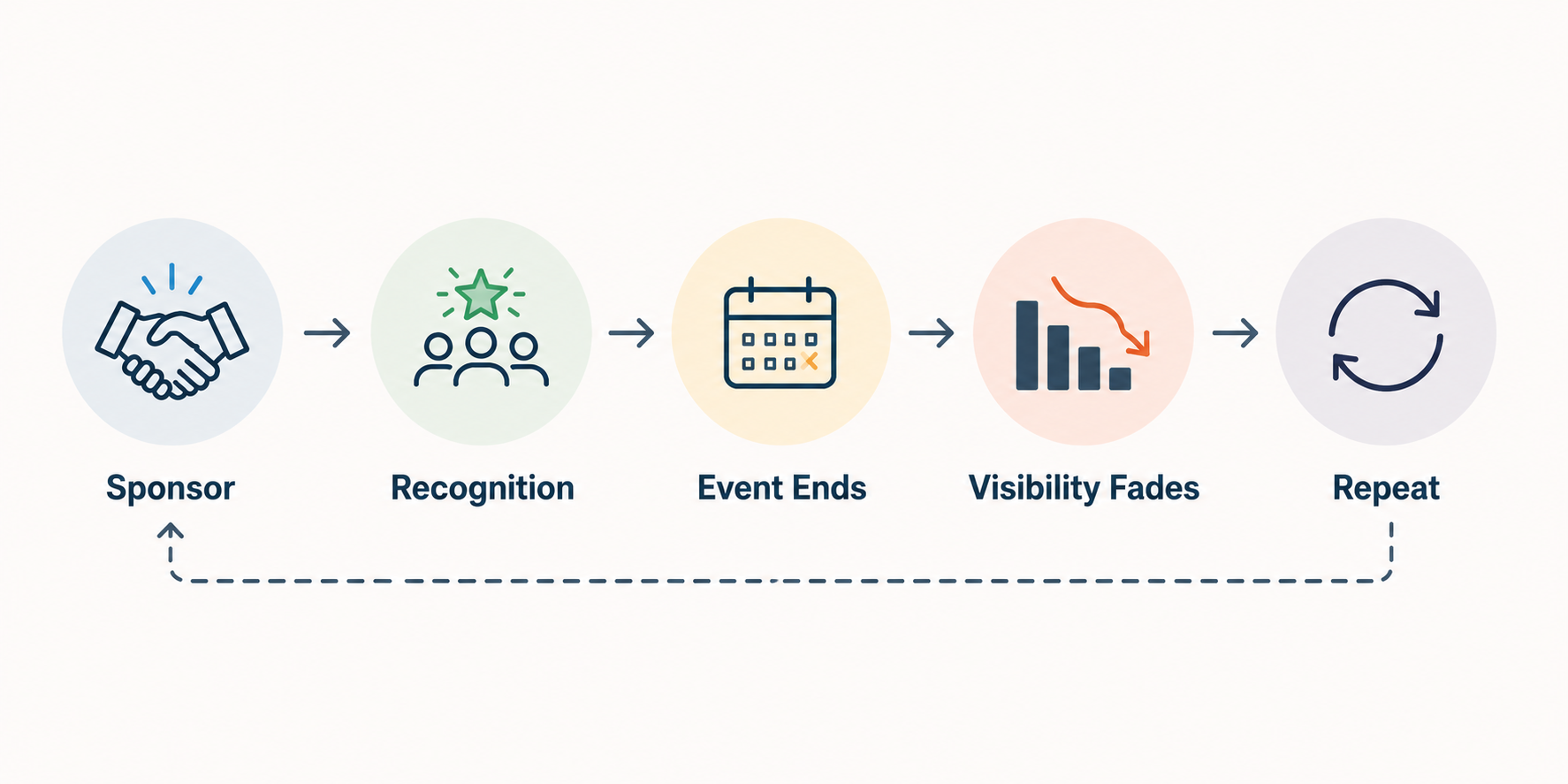
Nothing about this process suggests that the original investments failed. Quite the opposite. They often succeeded in creating meaningful impact.
The challenge is that the business value generated by those investments is rarely preserved in a way that allows it to continue influencing customers, prospective employees, business partners, or increasingly, artificial intelligence systems that rely on publicly available information to understand and recommend businesses.
The community impact remains real.
The long-term business value becomes progressively harder to recognize.
Creating Value and Preserving Value Are Different Disciplines
Imagine two businesses operating in the same city. Each contributes approximately the same amount of money to local organizations every year. Each encourages employees to volunteer. Each has earned a reputation among nonprofit leaders as a dependable community partner.
From the perspective of the organizations they support, the businesses may appear nearly identical.
From the perspective of long-term business growth, however, they may produce very different outcomes.
The first business views every sponsorship, donation, volunteer initiative, and nonprofit partnership as an individual activity. Each year begins a familiar cycle of planning, participation, recognition, and conclusion. Once an initiative ends, attention naturally shifts toward the next opportunity.
The second business takes a different approach. It views every community investment as another contribution to a long-term record of community leadership. Rather than allowing each initiative to exist independently, the business intentionally preserves and organizes the evidence of its community involvement so that every new contribution strengthens the story established by those that came before it.
Neither business is more generous.
Neither business spends more.
Yet over time, one business accumulates significantly greater trust, visibility, and credibility from essentially the same level of community investment.
The difference is not the amount invested.
The difference is whether the value created by those investments is intentionally preserved and allowed to accumulate over time.
Why This Question Matters More Than Ever
Historically, much of a business's reputation was built through personal relationships and word of mouth. People knew which companies supported local causes because they attended the same events, served on the same boards, or lived in the same communities.
Today's buying decisions increasingly begin somewhere else.
Customers research businesses before contacting them. Job candidates evaluate employers online before applying. Business partners investigate potential relationships before making introductions. Artificial intelligence systems are beginning to summarize, compare, and recommend businesses based on the information they are able to discover and interpret.
This shift changes the economics of community involvement.
Businesses that have spent years strengthening their communities possess an extraordinary advantage—provided that history can actually be discovered and understood. When evidence of community leadership exists only in fragmented sponsorship pages, aging press releases, isolated social posts, and fading institutional memory, much of its long-term strategic value becomes difficult to access.
In other words, the issue is no longer whether businesses are creating community impact.
The issue is whether that impact remains visible, understandable, and meaningful as time passes.
A Different Way to Think About Community Involvement
Perhaps the most significant opportunity is not encouraging businesses to become more involved in their communities.
Perhaps it is helping them think differently about the involvement they have already created.
For decades, community sponsorships, donations, volunteer programs, and nonprofit partnerships have been viewed primarily as charitable activities or marketing initiatives. That perspective is understandable because these efforts often originate within marketing departments, community relations teams, or executive leadership.
Yet that framing may unintentionally underestimate what businesses are actually building.
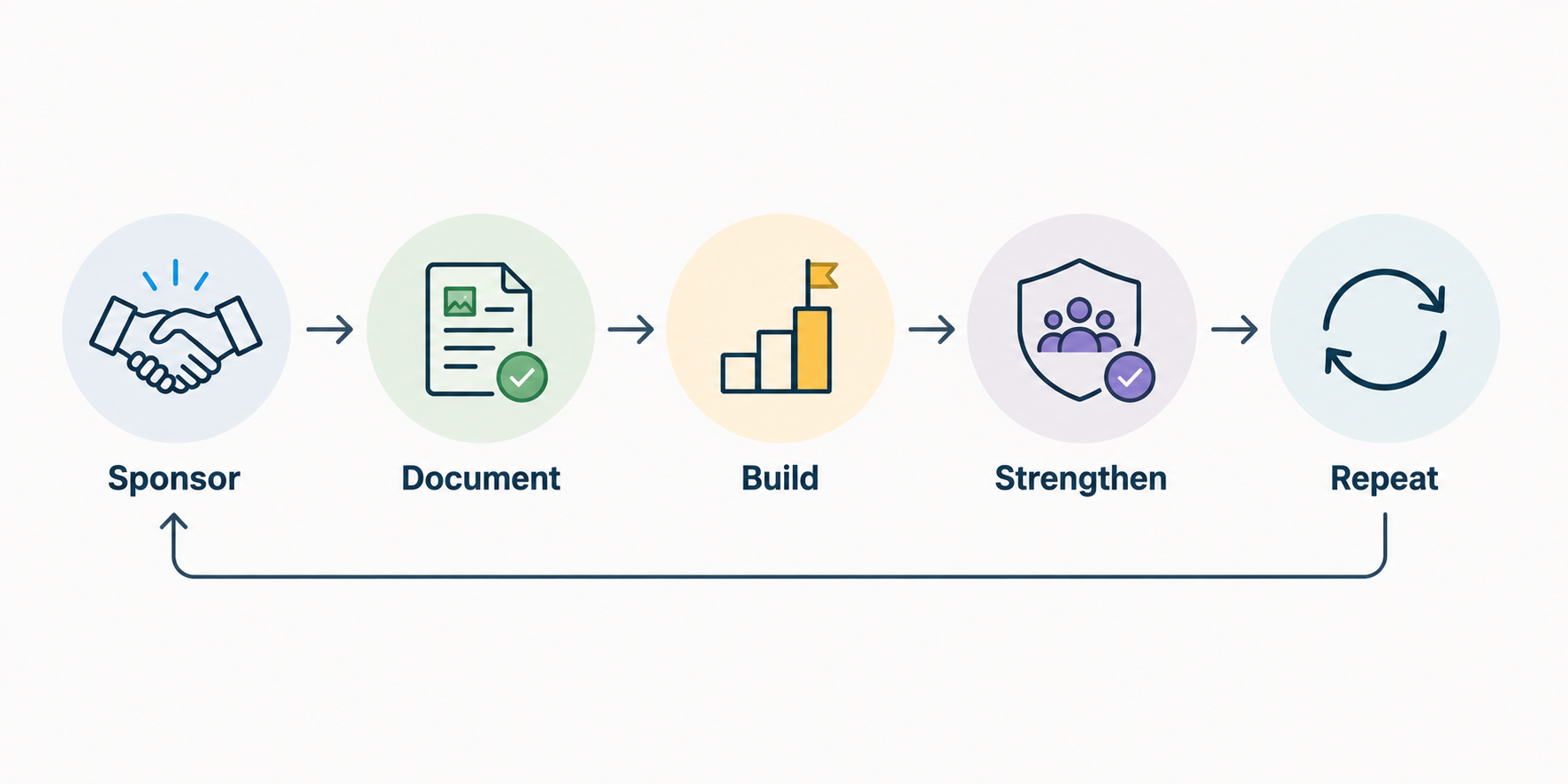
Every meaningful contribution strengthens relationships. Every year of sustained involvement reinforces credibility. Every nonprofit partnership becomes another signal that the business consistently invests in something larger than itself.
Viewed individually, these efforts appear temporary.
Viewed collectively, they begin to resemble something much more enduring.
A long-term business asset.
The Opportunity Businesses Have Been Missing
Assets become more valuable when they are intentionally managed.
Businesses understand this instinctively. They maintain customer databases because relationships matter. They invest in financial reporting because information compounds in usefulness over time. They preserve institutional knowledge because future decisions benefit from past experience.
Community involvement deserves the same level of intentionality.
Not because businesses should give only when there is a financial return, but because businesses that genuinely invest in their communities deserve to benefit from the trust, credibility, and visibility they have worked so hard to earn.
That requires a different mindset.
Instead of asking, "What should we sponsor next?"
Businesses might begin asking, "How do we ensure the investments we've already made continue creating value for years to come?"
The answer to that question may ultimately become one of the most important competitive advantages available to local businesses.
Conclusion
Community involvement has traditionally been evaluated as an expense, a marketing activity, or an act of corporate citizenship.
Those perspectives are all valid.
They are simply incomplete.
The businesses that will distinguish themselves over the next decade are unlikely to be those that spend the most on community initiatives. They will be the businesses that recognize those initiatives are creating something capable of growing stronger every year if it is intentionally preserved, organized, and built upon.
In other words, community impact should not behave like a depreciating marketing expense.
It should behave like an appreciating business asset.
That is not simply a different way of describing community involvement.
It is an entirely different way of thinking about it.
About MasterGiver
MasterGiver is building the emerging discipline of Community Impact Management by helping businesses understand, document, and communicate the long-term value created through their community involvement. Through research, educational content, and its platform, MasterGiver is working to help businesses receive more recognition - and more lasting business value- for the good they're already doing.





 support@mastergiver.com


